


-
11 min read
Jan 7, 2025 2:04:46 PM
Share On:


Investment stability has become increasingly valuable in today’s uncertain economic environment. For advisors seeking reliable, income-generating solutions for their clients, single-tenant Delaware Statutory Trusts (DSTs) can offer a compelling structure.
By focusing on properties leased to essential, creditworthy tenants under long-term lease arrangements, single-tenant DSTs may help support predictable cash flows and reduce exposure to market volatility—qualities that are particularly important during periods of economic disruption.
Why Single-Tenant DSTs Appeal in Volatile Markets
Single-tenant DSTs involve properties leased to one tenant, typically under long-term, triple-net (NNN) leases. Under this structure, the tenant is responsible for property-level expenses such as taxes, insurance, and maintenance, which simplifies management and supports income consistency for investors.
Beyond lease structure, tenant quality is central to stability. Properties leased to businesses operating in essential, high-demand industries are often better positioned to withstand economic stress. CAI Investments’ Manufacturing Essential Asset (MEA) projects reflect this approach, focusing on tenants whose operations remain critical regardless of broader market conditions.
Key Takeaway: Long-term NNN leases combined with essential, creditworthy tenants can help support income stability during volatile markets.
Case Study 1: U.S. Medical Nitrile & Polyisoprene Chemical Company (USMNPC)
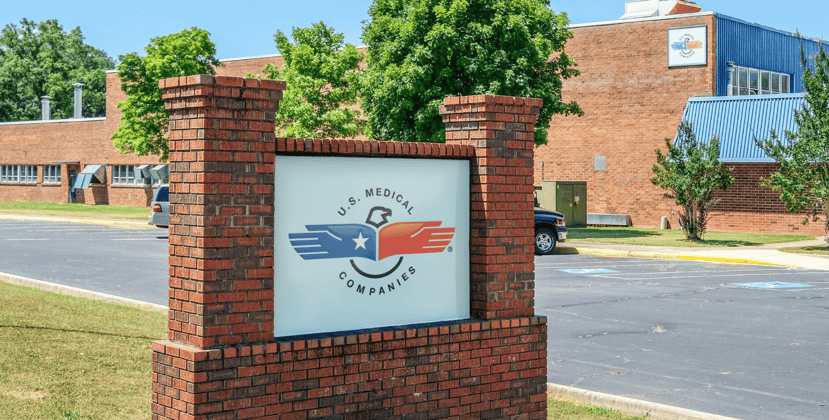
One of CAI Investments’ notable single-tenant DSTs features a 96,000-square-foot facility leased to an affiliate of U.S. Medical Glove Company (USMGC) in Greenville, South Carolina. USMNPC is the only U.S.-based glove manufacturer capable of producing its own polyisoprene 9000 for non-latex surgical gloves.
The property was structured as a sale-leaseback, allowing the tenant to focus on operational growth while providing investors with a long-term lease backed by an essential healthcare-related business.
USMNPC supports both the U.S. Department of Defense and the Department of Health and Human Services, underscoring its role as a mission-critical operation. In periods of uncertainty, healthcare-related manufacturing has historically demonstrated resilience, adding an additional layer of stability to the investment profile.
Key Takeaway: Single-tenant DSTs tied to essential healthcare infrastructure may provide added durability during economic disruption.
Case Study 2: Revitalizing the Former Motorola Facility in Illinois
CAI Investments’ redevelopment of the former Motorola manufacturing facility in Harvard, Illinois, further illustrates the value of strategic site selection and repositioning within a single-tenant DST framework.
Originally developed as a major telecommunications manufacturing hub, the property faced challenges as market conditions evolved. CAI identified long-term potential based on location and scale and executed a comprehensive redevelopment strategy, including:
- Zoning and infrastructure enhancements
- Securing Tax Increment Financing (TIF) support
- Aligning the property with suitable long-term tenant needs
This approach transformed a dormant asset into an income-generating property, positioning it as a valuable component in CAI’s single-tenant DST offerings. By focusing on tenant suitability and the site’s strategic advantages, CAI turned a previously underutilized facility into a productive investment, benefiting investors through long-term leasing agreements and the potential for significant capital preservation.

Through this approach, CAI transformed a dormant asset into an income-generating property supported by long-term leasing arrangements, reinforcing capital preservation and stability for investors.
Key Takeaway: Strategic redevelopment and tenant alignment can unlock value in underutilized assets within a single-tenant DST structure.
Potential Benefits of Single-Tenant DSTs for Investors
1. Predictable Income
Single-tenant DSTs typically feature long-term leases that support consistent income streams. For investors seeking reduced variability, these lease structures may help limit fluctuations in cash flow.
2. Stability During Economic Uncertainty
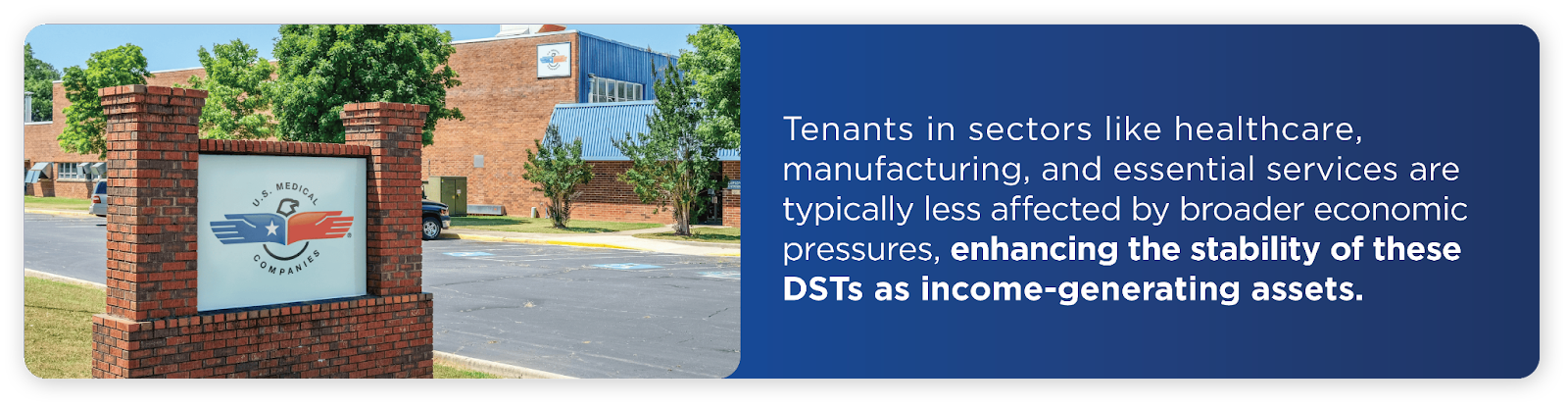
When leased to mission-critical businesses, single-tenant DSTs may offer resilience during downturns. Sectors such as healthcare, manufacturing, and essential services are often less sensitive to cyclical economic pressures.
3. Ease of Financing
Lenders may view single-tenant properties with long-term leases and strong tenants as lower risk, which can simplify financing and support transaction execution.
Key Takeaway: Income predictability, tenant resilience, and financing efficiency are central considerations in single-tenant DST investing.
What this Means for Advisors
For advisors seeking resilient real estate investment options, single-tenant DSTs offer a structure designed to emphasize stability and predictable income. By concentrating on creditworthy, mission-critical tenants and long-term lease arrangements, this approach may help counteract market volatility while supporting capital preservation.
As CAI Investments’ projects demonstrate, disciplined tenant selection and asset strategy can position single-tenant DSTs as a prudent option for investors seeking consistency in uncertain economic conditions.
-png.png?width=950&height=306&name=42441%20CAI%20BOFU%20Email%20Schedule%20a%20consultation%20campaign%20CTA%201%20(3)-png.png)
Key Takeaways
• Single-tenant DSTs focus on one tenant under long-term lease structures
• Triple-net leases support predictable income and reduced operating risk
• Tenant quality and industry relevance are critical to long-term stability
• Essential industries may provide added resilience during market volatility
• Strategic redevelopment can enhance asset value and income durability
Frequently Asked Questions (FAQs)
Comments